Views: 0 Author: Site Editor Publish Time: 2026-06-24 Origin: Site
For many, the concept of 3D scanning is still associated with the flashy scenes seen in movies—where simply circling an object generates a 3D model. In reality, however, industrial 3D scanners have long since become indispensable "all-seeing eyes" in manufacturing, profoundly transforming key processes such as product design, quality inspection, and reverse engineering.
An industrial 3D scanner is a high-precision device capable of rapidly capturing the 3D geometric data of an object's surface. By employing technologies such as laser,structured light,or CT scanning,it "digitizes" physical objects to generate high-precision 3D models.
Laser beams are projected onto the object's surface, and 3D coordinates are calculated by capturing the deformation of the laser lines via a camera. This method offers handheld flexibility and is suitable for large-scale workpieces with complex curved surfaces, such as automotive sheet metal, castings, and molds.
Coded blue light patterns are projected onto the object's surface, and 3D data is calculated based on the deformation of these patterns.Blue light offers strong resistance to ambient light interference and high scanning precision,making it suitable for applications such as precision components, electronic parts, and jewelry.
Captures 3D data of a specific area in a single shot and stitches images taken from multiple angles into a complete model. Suitable for small to medium-sized workpieces; offers fast scanning speeds.
Similar to medical CT, this technique uses X-rays to penetrate an object and acquire data on its internal and external structures.It enables non-destructive inspection of internal product defects, such as porosity in castings, weld quality, and the internal structure of plastic parts.
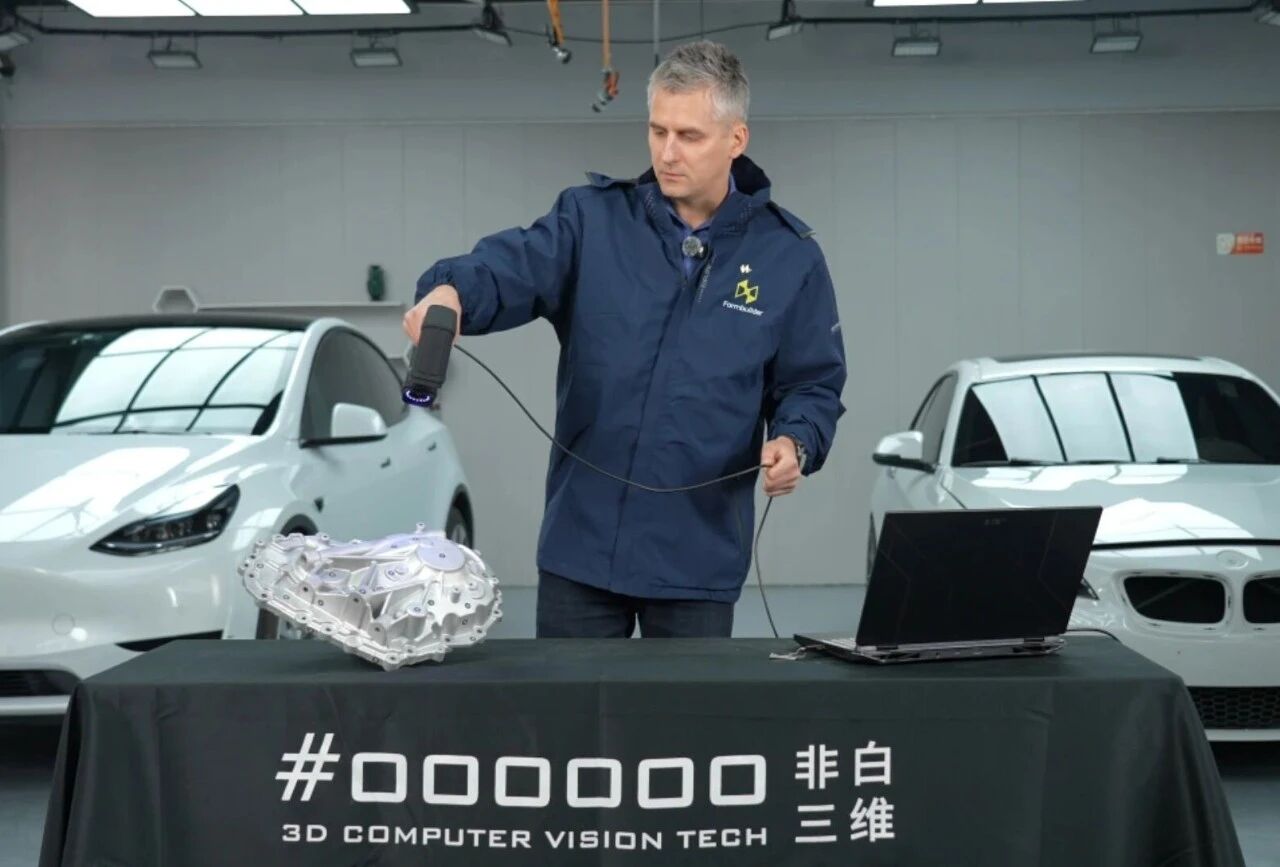
3D scanners can capture complete point cloud data in just a few minutes-increasing efficiency more than tenfold—while providing data that is complete, editable, and analyzable.
3D scanning enables full-dimensional inspection: the scan generates an actual 3D model of the workpiece, which is then compared and analyzed against the original CAD design model to produce a quality inspection report that visually displays the deviation values at every location.
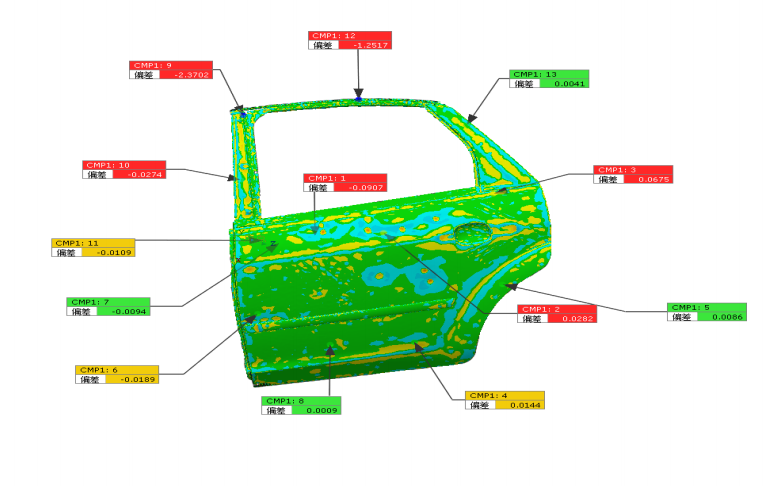
By scanning the mold cavity and the actual injection-molded or die-cast product, comparative analysis is used to identify specific areas of interference and the magnitude of deviation, directly guiding CNC machining corrections. This significantly shortens the mold debugging cycle.
3D scanning enables precise analysis of machining allowances across various locations of a blank, allowing for the detection of "black spots" (areas where machining is insufficient) or excessive allowance (material waste). This helps optimize blank design and machining processes.
• Frequently manufacture parts with complex surfaces (molds, blades, impellers, automotive body panels, castings)
• Need to rapidly reverse-engineer and modify product designs, or replicate and improve upon competitors' products
• Possess precision machining capabilities but lack matching, high-efficiency inspection methods
• First-article inspection takes too long, delaying delivery schedules
• Frequently encounter mold issues, leading to high costs from repeated mold trials and modifications
• Need to perform incoming inspections on outsourced parts but lack effective inspection methods
When many companies encounter 3D scanners for the first time, they are prone to the "accuracy-above-all" mindset—assuming that figures like 0.02mm or 0.01mm mean "the higher the precision, the better." However, the reality is far more complex:
Accuracy Type | Meaning |
Absolute Accuracy | The inherent measurement accuracy of the scanner itself; it can reach 0.01–0.03 mm for small to medium-sized workpieces. |
Repeatability | The consistency of results across multiple scans; equipment with poor environmental adaptability exhibits very poor repeatability. |
Environmental Adaptability | Factors such as temperature fluctuations, ambient light interference, and reflections from oil or grease can affect actual performance. |
Recommendation: Do not rely solely on specification sheets; be sure to conduct actual tests on your own workpieces within a real workshop environment. Precision only needs to be sufficient for the task; stability and efficiency are sometimes more important than extreme precision.
I am often asked this question. The answer is: each has its own advantages, and they complement rather than replace each other.
Equipment | Core Advantages | Application |
3D scanners | High speed, high data density, suitable for surface analysis and full inspection | Complex surfaces, free-form surfaces, full-dimension inspection |
CMMs | Higher single-point accuracy (sub-micron level) | High-precision measurement of reference hole locations and critical dimensions. |
Industrial 3D scanners have evolved from luxury items into standard tools in manufacturing. They address a core challenge: rapidly and accurately converting the physical world into digital models, which then drive machining, inspection, and optimization decisions.
About Hangzhou Blackboxcv Co., Ltd:We specialize in the R&D and manufacturing of industrial handheld 3D scanners. Our products serve a wide range of applications, including precision component inspection, mold modification, reverse engineering, and the analysis of castings and forgings. Please feel free to contact us to arrange an on-site demonstration.


