Views: 0 Author: Site Editor Publish Time: 2026-06-02 Origin: Site
To the business owners in the machining and mold-making industries: have you ever found yourselves in this situation?
You spend over a hundred thousand on a 3D scanner—lured in by a salesperson's sky-high promises and a spec sheet filled with incomprehensible numbers—only to bring it back to the workshop and find it completely useless. Highly reflective parts won't scan at all; black rubber parts seem to turn invisible; and if a part is even slightly on the larger side, stitching errors and data drift become rampant. When you turn to the manufacturer for help, they simply brush you off with a dismissive "The problem lies with your operating technique."
These are the true "tales of woe" we hear every day while working with manufacturing engineers and quality managers. In today's article, with a mindset focused on setting the record straight, we aim to thoroughly demystify the entire process of selecting a 3D scanner.
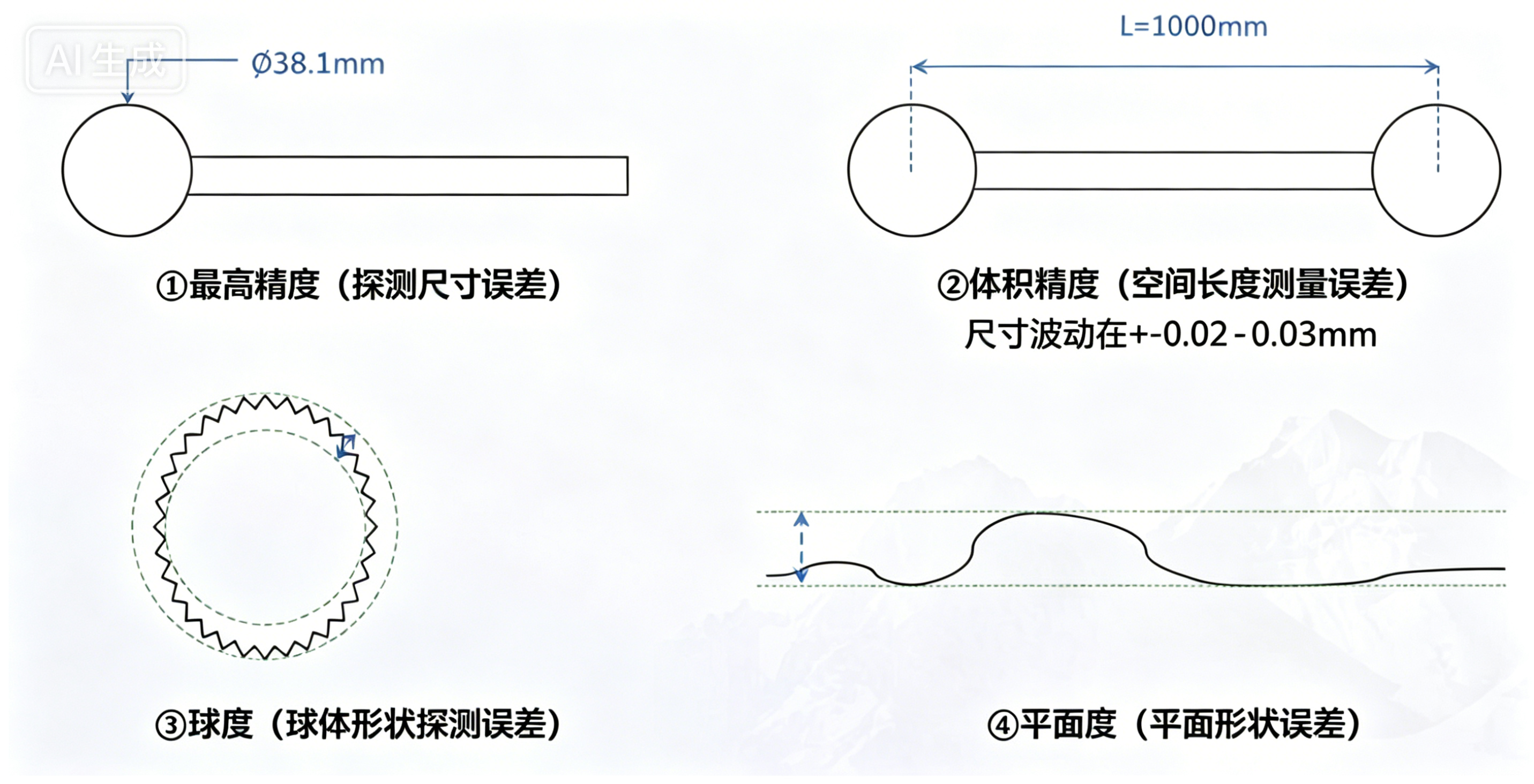
When purchasing a scanner, the first thing many users look at is the precision figure—whether it's 0.02mm, 0.01mm, or even 0.005mm—assuming that the smaller the number, the more impressive the device. The truth, however, is that precision is not a single value, but rather a comprehensive system.
• Single-frame precision:The theoretical upper limit of accuracy for a single scan.
• Volumetric precision: The overall accuracy across the entire spatial volume when scanning large workpieces—this constitutes the true critical metric.
• Repeatability: The magnitude of deviation in results when scanning the same workpiece 10 times—this represents the very essence of stability.
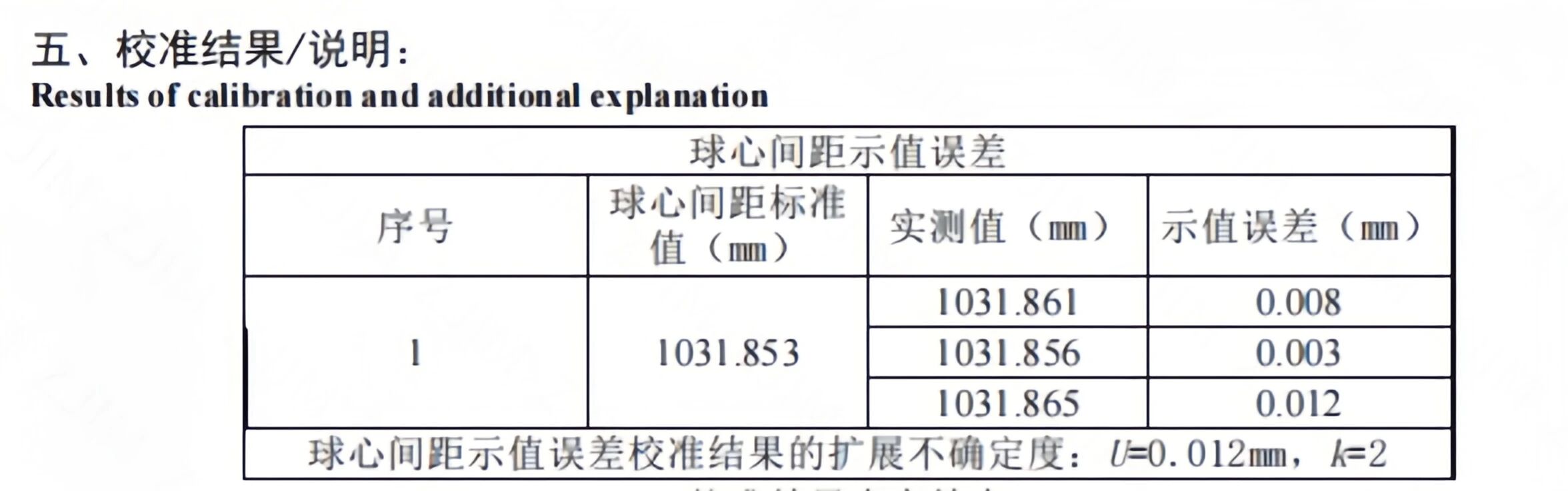
Tip to Avoid Pitfalls: Request "volumetric accuracy" data from the manufacturer and insist on a repeatability test. Scan a standard ball bar 20 times to observe the fluctuation range of the center-to-center distances. For truly reliable equipment, the deviation should consistently remain within 0.005 mm.
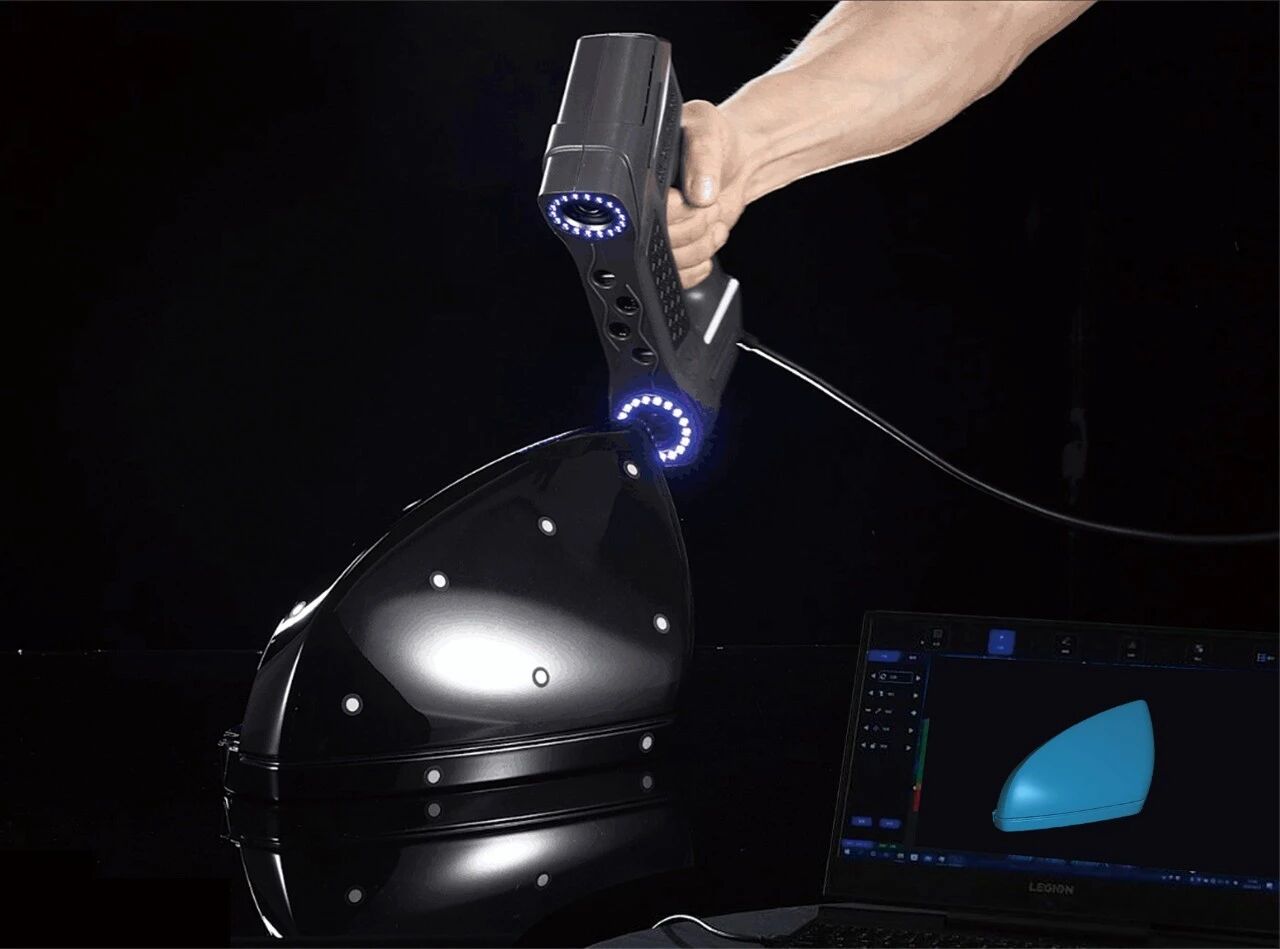
• Highly Reflective Surfaces: Light striking the surface is reflected directly back, "blinding" the camera and resulting in significant data loss.
• Black Materials: Possess strong light-absorbing properties and emit weak reflected signals; many scanners are simply "unable to see" them.
• Transparent Materials: Light passes through rather than reflecting; the camera is completely unable to capture any signal.
The Traditional "Crude Method": Powder Spraying
Spray coating alters the surface condition of the workpiece. Its thickness is uncontrollable—typically ranging from a few to several tens of microns—which, for the purposes of precision inspection, inherently introduces a source of error. Furthermore, the workpiece requires cleaning after spraying, thereby adding an extra step to the workflow.
High-end industrial-grade scanners leverage multi-angle exposure fusion and dynamic filtering algorithms to directly scan highly reflective or matte-black workpieces without the need for powder spraying. This approach neither alters the workpiece's original state nor introduces any additional processing steps.
A Buying Tip: If you frequently deal with these "tricky" workpieces, you can take a sample directly to the manufacturer's facility for on-site testing; no matter how impressive the specifications sound, nothing beats scanning the actual part to see the results firsthand.
Hardware determines the upper limit of data acquisition, while software determines how much of that data you can effectively utilize. Core software capabilities are assessed based on two key points:
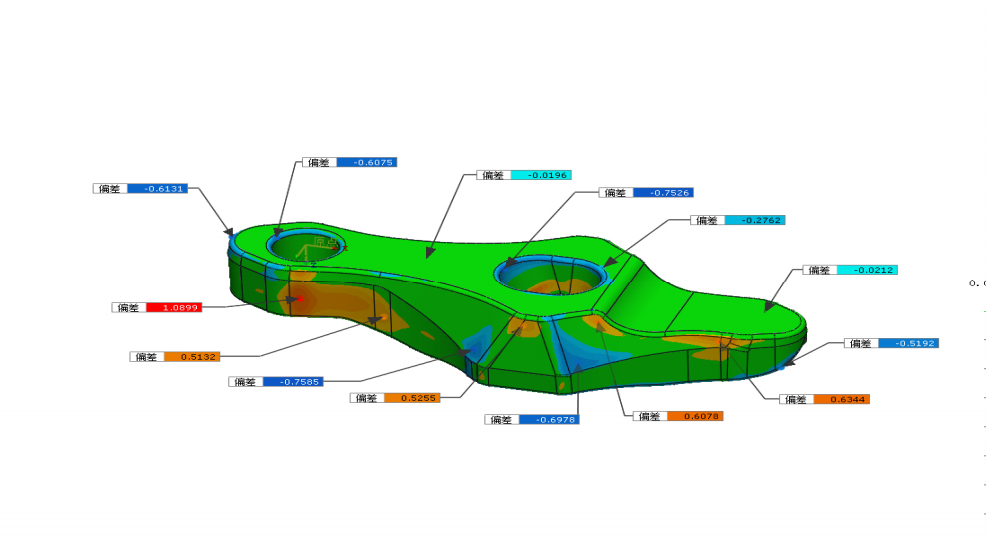
Industrial 3D scanning is not merely about "seeing what a workpiece looks like," but rather about identifying "where it fails to meet specifications." Professional inspection software should be capable of the following:
• Automatically aligning with CAD digital models and generating color-coded deviation maps;
• Generating reports on geometric dimensioning and tolerancing (GD&T), as well as cross-sectional profile analyses;
• Supporting the generation of standardized, traceable inspection reports that possess data validity and regulatory compliance.
If a manufacturer is vague regarding their software's functionality—or tells you that "this feature requires the purchase of an additional plugin"—turn away immediately. Opt for brands that offer integrated hardware-software solutions and proprietary algorithms; this not only ensures a smoother user experience but also guarantees more reliable support for future upgrades and iterations.
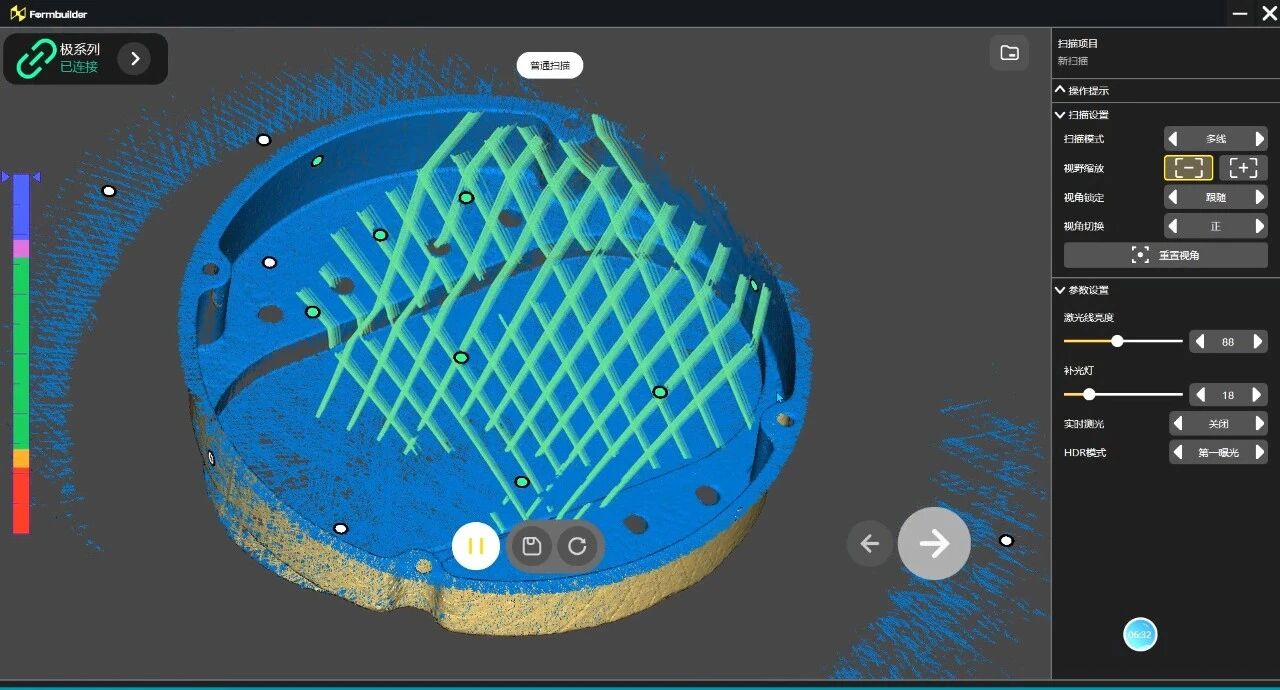
When making a purchase, ask yourself three questions:
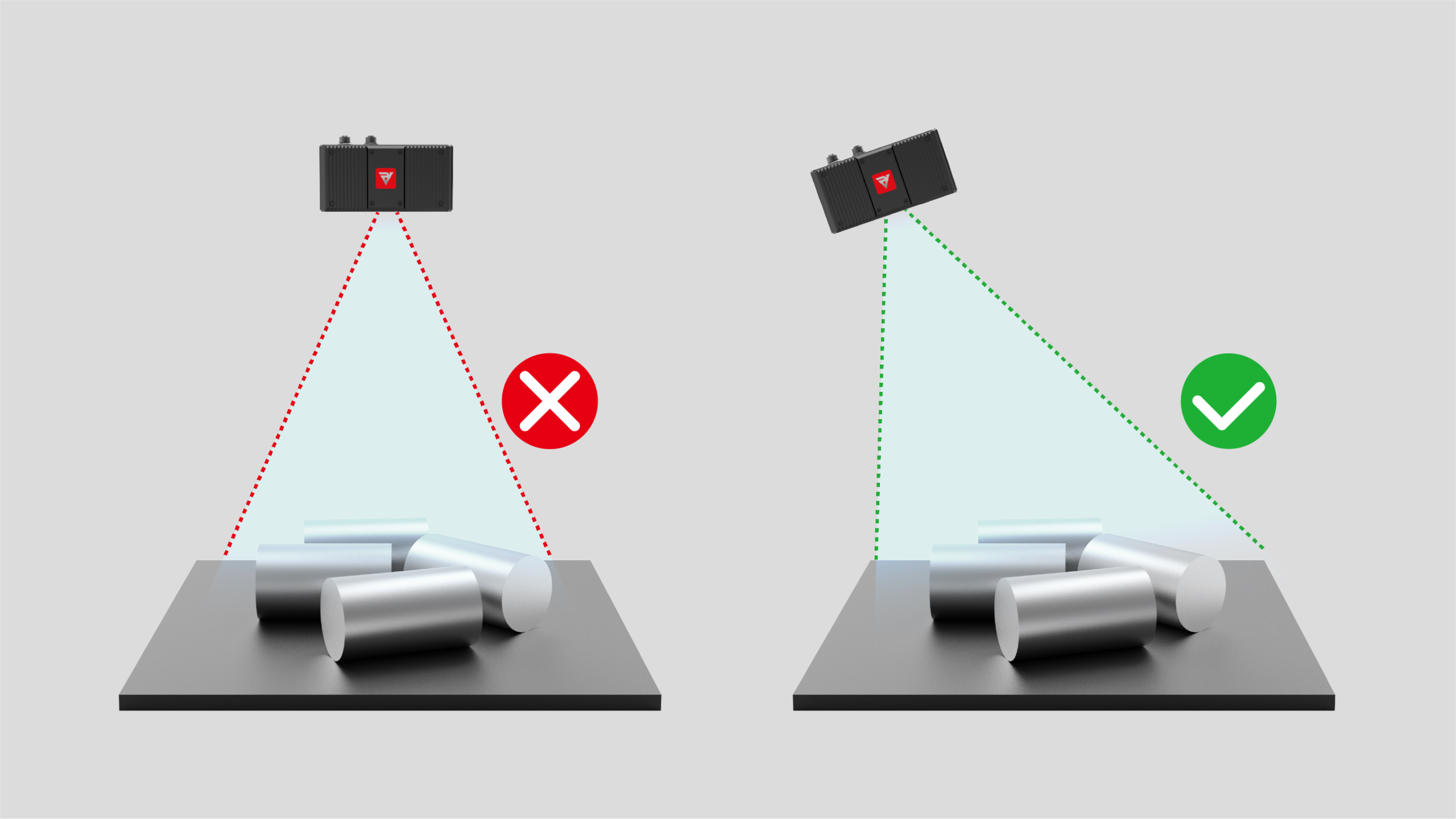
1. How well does it resist ambient light interference? Will the fluorescent lighting in the facility—or sunlight streaming in through the windows—cause the scanned data to become distorted or "noisy"?
2. Is the physical structure sufficiently stable? An aluminum alloy body versus a plastic casing—the ability to maintain accuracy over the long term differs completely.
3. Is the after-sales support adequate? The equipment requires periodic calibration; if a technical issue arises, is there someone available to provide a timely response?
A true industrial-grade 3D scanner is designed to the standards of a "metrological instrument." From lens distortion control and rigid structural design to the robustness of its core algorithms, every single aspect adheres to the principle of "accuracy first"—making it far superior to, and incomparable with, a mere "upgraded version" of a consumer-grade product.
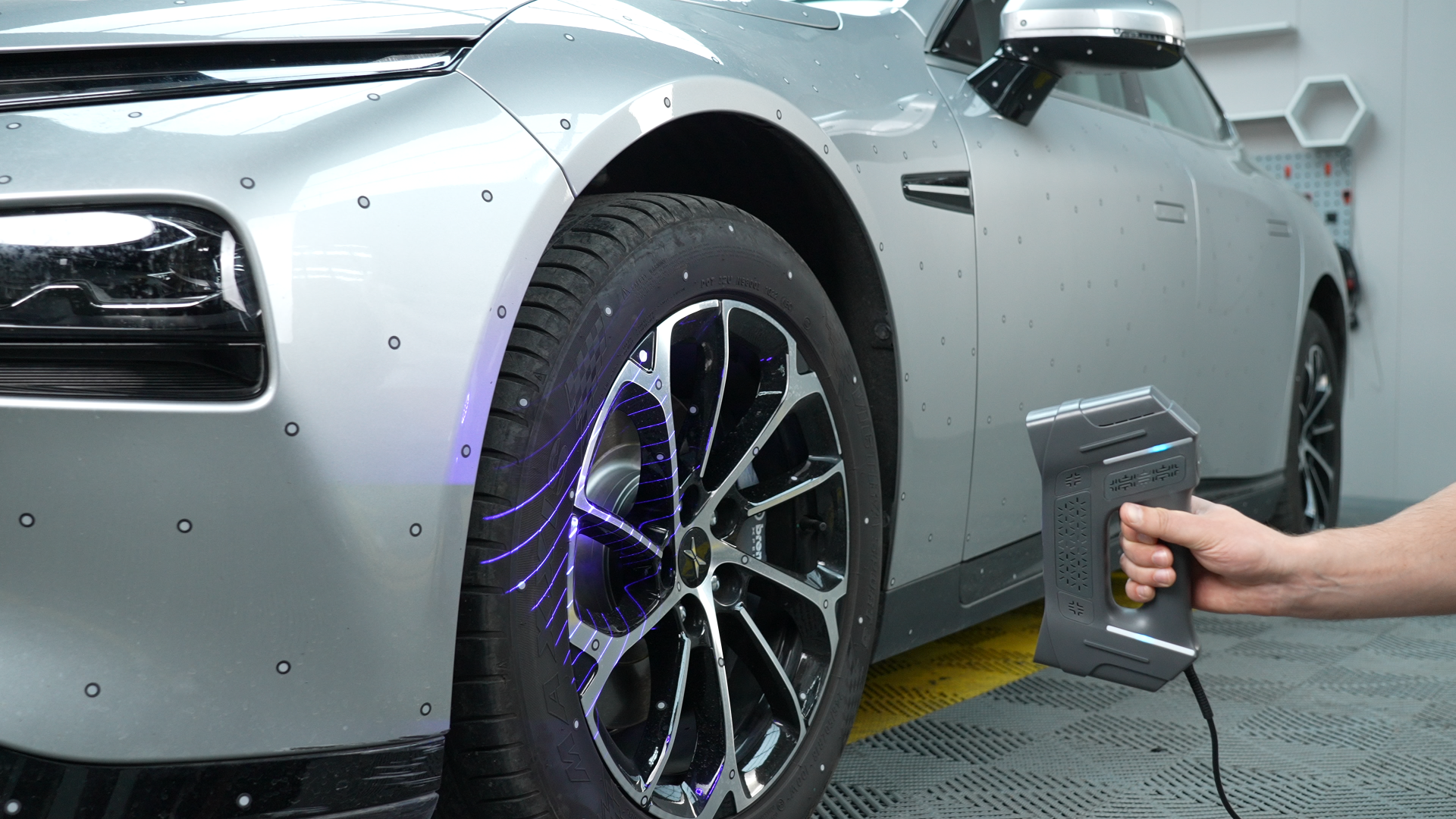
The market prices for 3D scanners range from a few thousand to hundreds of thousands. How do you choose? Keep one principle in mind: select based on your specific needs, avoiding both over-specification and under-specification.
• If your needs involve: mobile phone cases, portraits, small decorative objects, or 3D printing as a hobby—a consumer-grade scanner is sufficient.
• If your needs involve: automotive parts inspection, reverse engineering of molds, aerospace applications, or medical devices—an industrial-grade scanner is absolutely essential.
Having discussed technical specifications and pricing, there remains one critical factor that procurement teams frequently overlook—yet it can prove even more detrimental than a lack of precision: Does the equipment you are purchasing have a clean provenance?
If you utilize infringing products for commercial profit—and the original manufacturer subsequently initiates legal action to enforce their rights—you, as the end-user, could face the following consequences:
• Seizure of equipment and the complete shutdown of production lines;
• Recoupment of illicit profits and exposure to substantial financial damages;
• Severe damage to your corporate reputation, causing clients to hesitate—or refuse—to entrust you with high-precision orders.
Hangzhou blackboxcv Co.,Ltd has been in operation for 11 years. We have dedicated the majority of our efforts to the "invisible" aspects of our work:
• Proprietary Algorithms: Every single line of code is written in-house, ensuring complete freedom from open-source licensing risks or copyright disputes.
• Strategic Patent Portfolio: We hold an extensive portfolio of patents covering our core algorithms and hardware architecture—assets that stand up to the most rigorous scrutiny.
• Compliance-Assured Delivery: Having served thousands of manufacturing clients, our equipment is guaranteed to pass regulatory reviews and factory audits, allowing you to deploy and use it with complete peace of mind.
If you are currently struggling with equipment selection, we warmly invite you to bring your sample parts to Feibai 3D for a demonstration and testing session.


