Views: 0 Author: Site Editor Publish Time: 2026-06-10 Origin: Site
With the rapid advancement of 3D scanning technology, the market is flooded with a wide array of scanners, with prices ranging from a few thousand yuan to hundreds of thousands—or even over a million—yuan. First-time users often wonder: why is there such a vast price difference between 3D scanners? What exactly sets them apart?
As a national high-tech enterprise specializing in industrial-grade 3D scanning solutions, Feibai 3D interacts daily with manufacturing engineers, quality managers, and mold specialists. We have encountered countless clients inquiring based on the specifications of consumer-grade products, as well as numerous cases where the wrong equipment choice led to project delays and cost overruns.
Today, we will provide an in-depth analysis of the fundamental differences between consumer-grade and industrial-grade scanners across four dimensions: technical principles, core specifications, validation standards, and application scenarios. Our goal is to clear up the confusion and help you make the right choice for your business.
• The core objective of consumer-grade scanners is "visibility"—meeting the needs of hobbyists and small studios to digitize simple objects such as portraits and small ornaments. Their marketing often emphasizes color accuracy, portability, or fun.
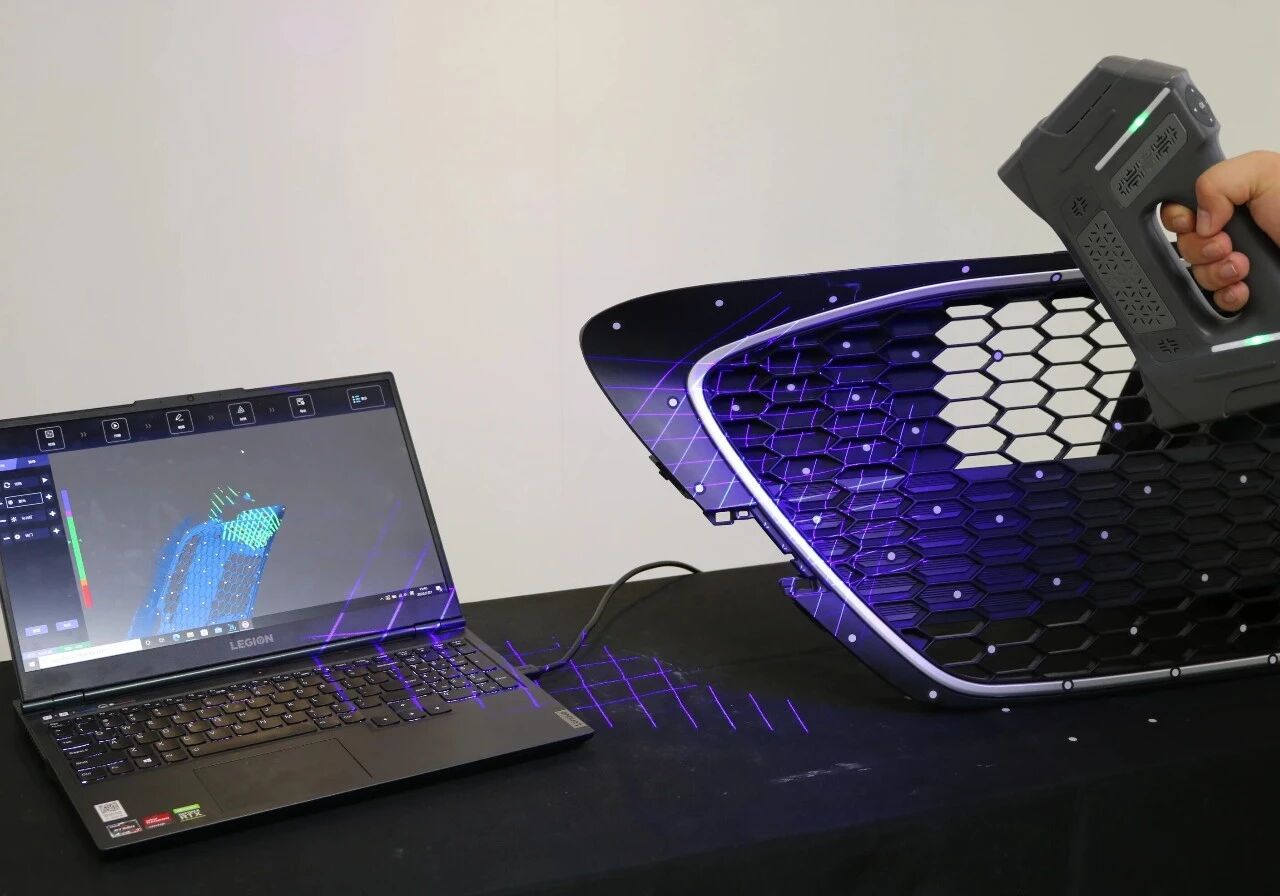
• The core objective of industrial-grade 3D scanners is "measurement accuracy"—providing the manufacturing sector with high-precision, highly repeatable measurement data for quality control and reverse engineering.
From the distortion control of optical lenses and the rigid design of the housing structure to the robustness of core algorithms, every aspect of an industrial-grade scanner adheres to the principle of "precision first"; it is by no means merely an "upgraded version" of a consumer-grade product.
Accuracy is the primary metric for distinguishing between the two; it is not a single value but a complex system comprising "single-frame accuracy," "volumetric accuracy," and "repeatability."
• Consumer-grade scanners typically offer precision in the 0.1 mm to 1 mm range—figures that generally represent "optimal precision under ideal laboratory conditions." In actual use, however, precision fluctuates significantly due to factors such as ambient lighting, the material of the object's surface, and hand tremors.
• Industrial-grade scanners achieve an accuracy of 0.01 mm to 0.02 mm-precision certified against international industry standards, ensuring data that is traceable, verifiable, and legally valid.
This means the equipment delivers consistent, reliable data in environments ranging from production workshops to temperature-controlled metrology labs, providing a solid basis for product acceptance or rejection.
When using an industrial-grade non-contact 3D scanner to inspect an automotive bearing housing, ten repeated scans yield measurement deviations consistently within 0.005 mm; this level of "repeatability" is a critical benchmark for stability in industrial production. In contrast, under the same test conditions, consumer-grade devices may exhibit deviations exceeding 0.1 mm, rendering them completely incapable of meeting quality control requirements.
Hardware determines the theoretical upper limit of data acquisition, whereas algorithms determine the effective accuracy achievable under complex, real-world operating conditions. At its core, the fundamental algorithm of an industrial-grade scanner is essentially a battle against countless sources of physical interference.
Industrial-grade algorithms feature specialized optimization modules designed to handle the "challenging" objects frequently encountered in manufacturing:
• Handling complex materials: For highly reflective surfaces, black rubber, and transparent plastics, industrial-grade scanners employ multi-angle exposure fusion and dynamic filtering algorithms to avoid altering the workpiece's original surface state through spraying.
• Ensuring data integrity: When scanning deep holes, reinforcing ribs, or narrow grooves, the algorithms intelligently plan scanning paths and compensate for missing data in real-time, ensuring the complete capture of features.
• Controlling cumulative stitching errors: When scanning large workpieces, industrial-grade algorithms control errors at the micron level through global optimization and closed-loop error resolution.
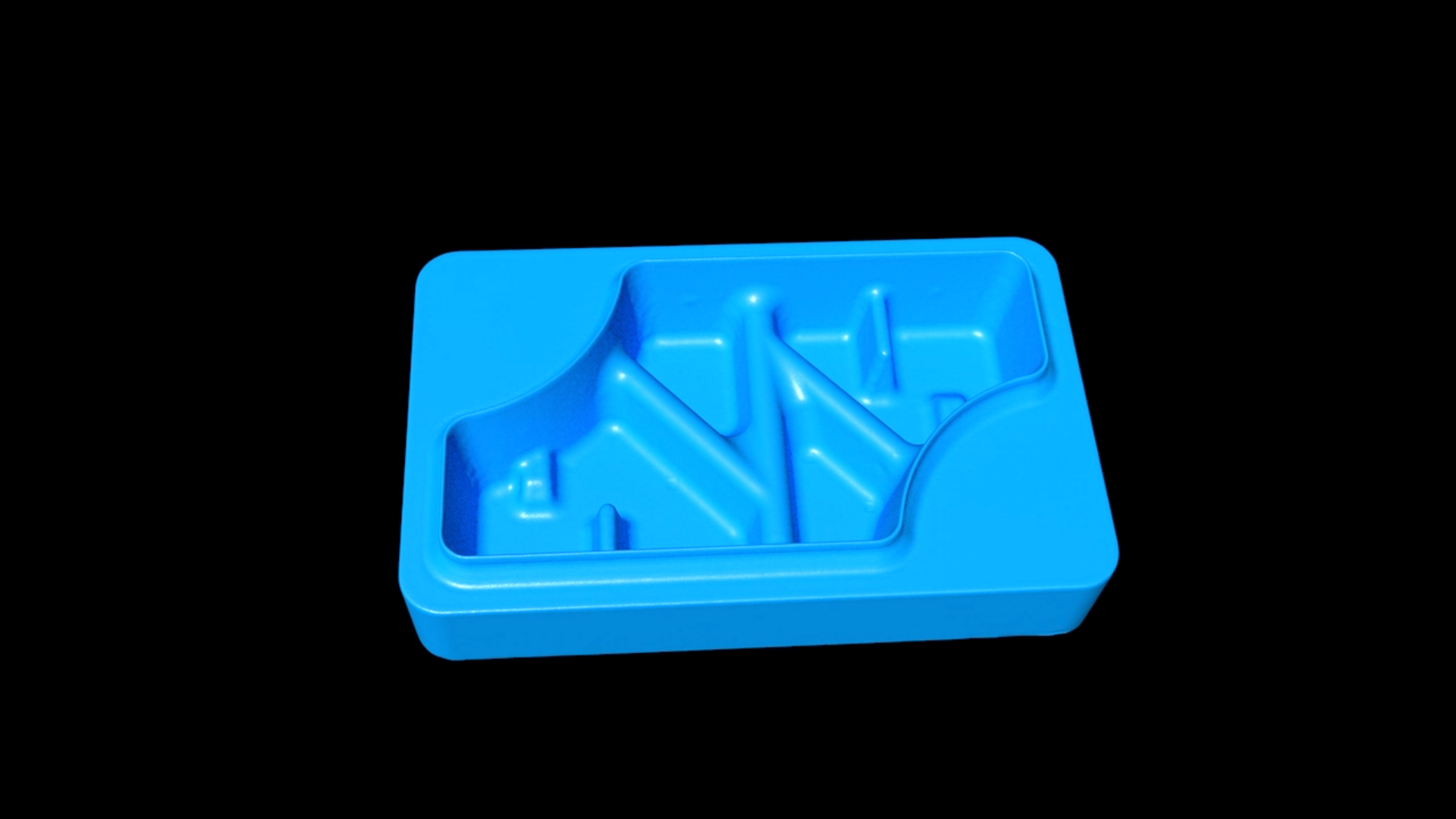
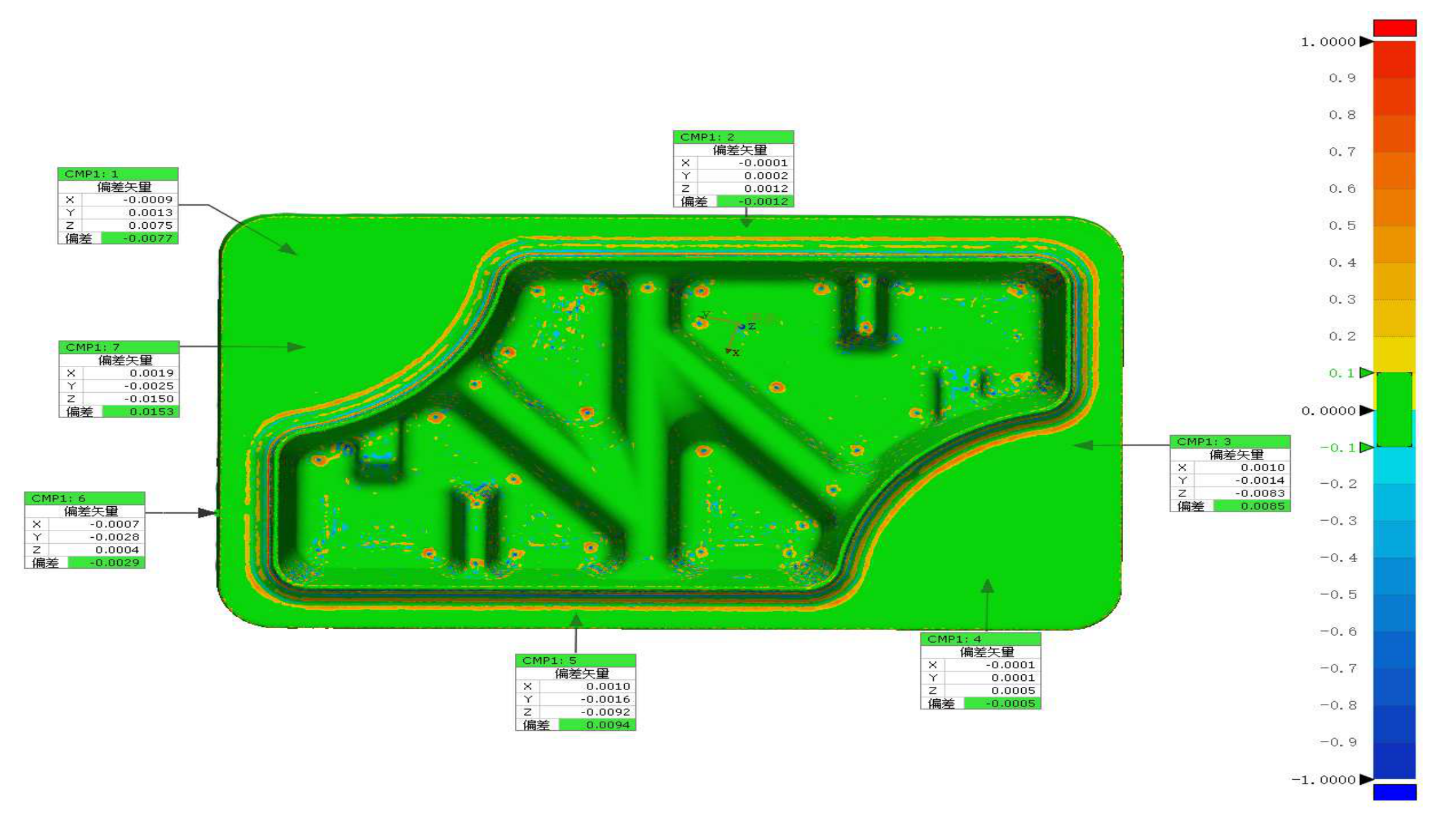
Industrial-grade scanners can rapidly capture complete 3D data of workpieces and automatically generate color-coded maps. The software also outputs professional reports on geometric dimensioning and tolerancing (GD&T), profile analysis of specific cross-sections, hole center-to-center distance deviations, and more.
Point cloud data acquired by industrial-grade scanners can be directly imported into professional reverse engineering software to generate NURBS surfaces, enabling the creation of parametric models ready for manufacturing.
Industrial-grade scanner are designed with interfaces and protocols for automated integration.They work seamlessly with robotic arms, AGVs, and automated turntables, enabling fully automated, unattended inspection based on preset programs.
• For applications such as figurine casting, personal 3D printing, and basic digitization of artifacts, consumer-grade solutions offer "good enough" visual results at a low cost.
• However, if you operate in sectors like manufacturing, aerospace, automotive components,mold making,or precision medical devices-where 3D scanning is integral to quality assurance and data must be reliable,traceable,and reproducible-then an industrial-grade scanner is not merely a cost, but an investment that hedges against risk.
Hangzhou Blackboxcv Co., Ltd. is a national high-tech enterprise specializing in industrial-grade 3D scanning and inspection systems.Our core team hails from institutions such as Zhejiang University and Zhejiang University of Technology, possessing full-stack, in-house R&D capabilities that span everything from underlying algorithms and hardware design to high-level software development.
• Handheld seriesscanner: Flexible and portable, ideal for complex on-site environments
• Tracking series scanner: Rapid scanning over large areas
• Automated measurement stations: Integrated robotics and software for one-click, comprehensive inspection
We believe that "real-world measurement reveals the truth"—we invite you to bring your most challenging samples to our facility for a live demonstration and validation, letting the data speak for itself.


